


Book 02 : The Mystery of the 144,000
Book 02 : The Mystery of the 144,000
- Chapter 1 — The Hidden Mystery
- Chapter 2 — The Sealed 144,000
- Chapter 3 — The Multitude Under the Blood
- Chapter 4 — Martyrs and the Wedding Supper
- Chapter 5 — The 144,000 with Christ
- Chapter 6 — The Philadelphian Connection
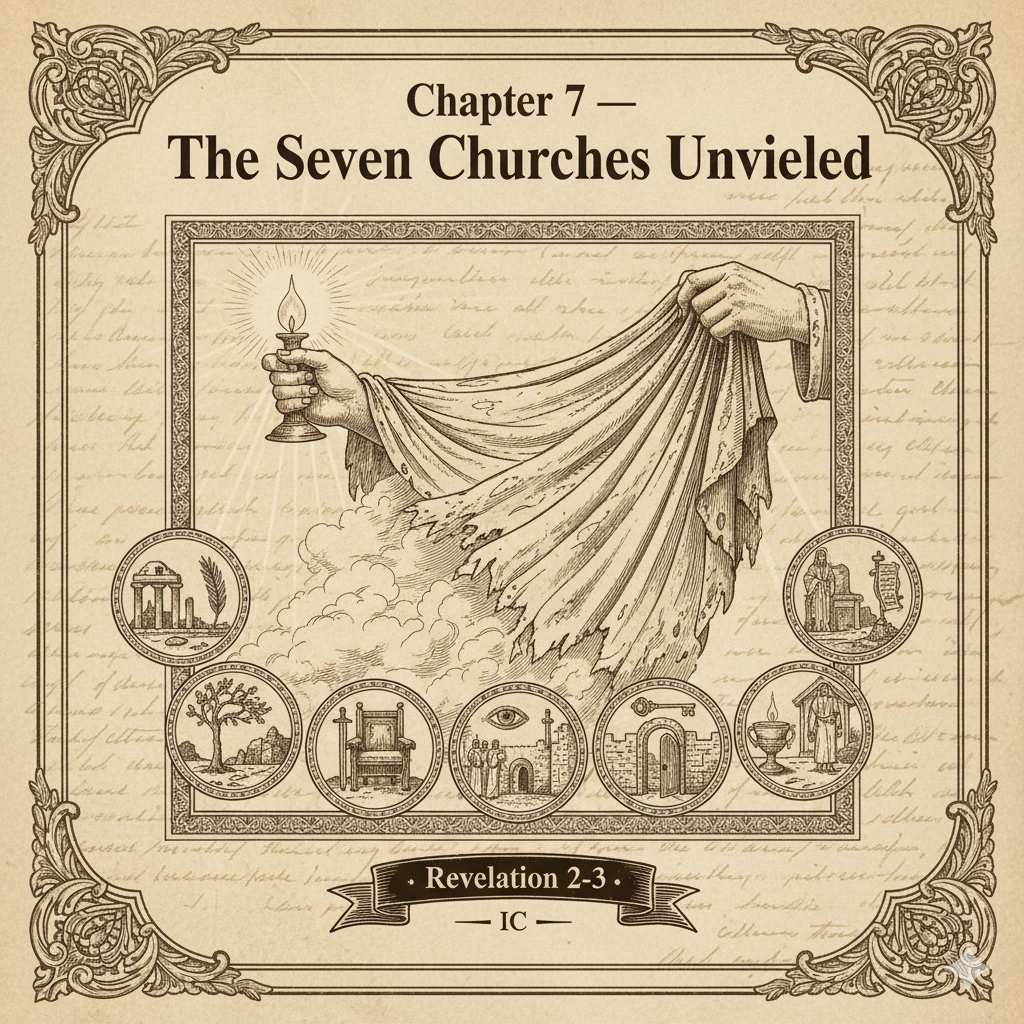
- Chapter 7 — The Seven Churches Unveiled
- Chapter 8 — The New Song
- Chapter 9 — The Final Verdict
- Chapter 10 — Faithful, Perfected, and Without Fault

Chapter 1 — The Hidden Mystery
The book of Revelation hides some of its greatest truths in plain sight. One of the most mysterious is the number 144,000. It appears twice in two different visions.
First, John hears the number in Revelation 7:
“And I heard the number of them which were sealed: and there were sealed an hundred and forty and four thousand of all the tribes of the children of Israel.” (Revelation 7:4)
Later, John sees the same number again in Revelation 14:
“And I looked, and, lo, a Lamb stood on the mount Sion, and with him an hundred forty and four thousand, having his Father’s name written in their foreheads.” (Revelation 14:1)
For centuries, teachers have assumed these are the same group. But the Spirit concealed the truth by using one number for two different realities. In Revelation 7, the 144,000 are sealed for temporary protection. In Revelation 14, the 144,000 are standing with Christ in His Kingdom, bearing His Father’s name forever.
This is no contradiction. It is concealment — a mystery hidden in plain sight, revealed only to those who read by the method God gave:
“For precept must be upon precept, precept upon precept; line upon line, line upon line; here a little, and there a little.” (Isaiah 28:10)
The math of God does not bend. When the precepts are stacked, the meaning is fixed. This book will uncover that meaning — showing who the 144,000 are, why there are two groups, and how they fit into the plan of God.
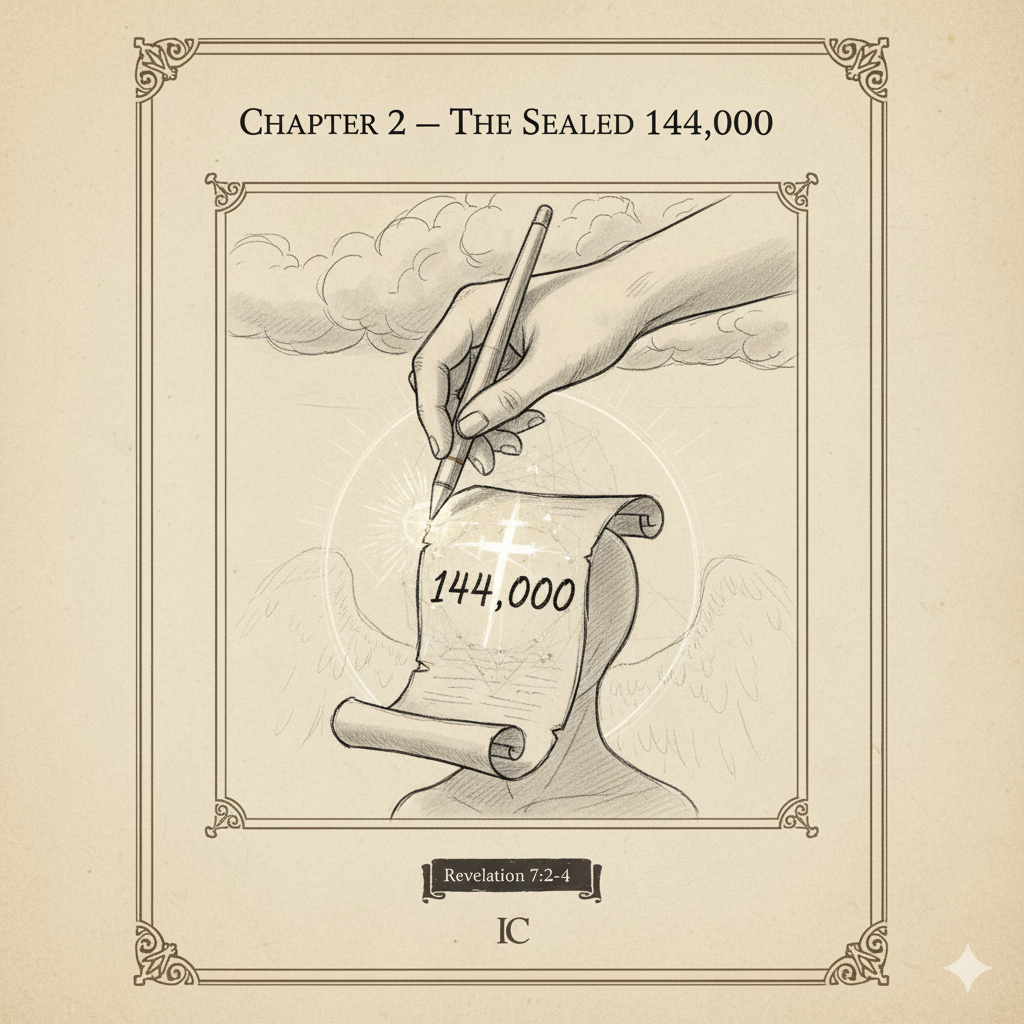
Chapter 2 — The Sealed 144,000
Revelation 7 opens with a command that halts judgment:
“Hurt not the earth, neither the sea, nor the trees, till we have sealed the servants of our God in their foreheads. And I heard the number of them which were sealed: and there were sealed an hundred and forty and four thousand of all the tribes of the children of Israel.”
(Revelation 7:3–4)
The key to understanding this passage is the word sealed.
The Greek word used here is sphragizō, meaning to mark, secure, or protect. It does not mean salvation. It does not mean eternal ownership. It describes a protective marking for a specific purpose and time.
This distinction is critical.
Sealing Is Protection, Not Redemption
Scripture provides the precept in the Old Testament.
In Exodus 12, Israel marked their doorposts with blood on the night of Passover:
“And the blood shall be to you for a token upon the houses where ye are: and when I see the blood, I will pass over you.”
(Exodus 12:13)
That blood did not grant eternal life.
It did not change the heart.
It did not remove sin permanently.
It was a temporary sign of protection during a specific act of judgment.
In the same way, the sealing of the 144,000 in Revelation 7 is a temporary mark for preservation, not a declaration of salvation.
The Time of Jacob’s Trouble
Scripture consistently defines the final period of distress as 3½ years — described as:
- time, times, and half a time
- 42 months
- 1,260 days
This period is called by different names depending on perspective:
- Jacob’s Trouble — from Israel’s suffering
- Great Tribulation — from the saints’ persecution
- The Day of the Lord — from God’s judgment
These are not separate time blocks. They describe different aspects of the same final 3½-year period.
There is no additional year added to Scripture.
There is no 4½-year timeline in the Bible.
Where the Sealing Fits
Revelation 7 does not create a new span of time. It introduces a condition:
Judgment cannot proceed until the sealing is complete.
This places the sealing within the 3½-year period, not before it and not after it.
The sealing:
- occurs before the most destructive expressions of judgment,
- does not guarantee protection from martyrdom,
- does not grant eternal standing before God.
It is a functional act, not a redemptive one.
Why the Sealing Is Not Salvation
This becomes clear when Revelation 7 is read as a whole.
After the sealing, John sees something different:
“After this I beheld, and, lo, a great multitude, which no man could number… clothed with white robes.”
(Revelation 7:9)
The sealed are marked.
The multitude are washed.
The sealed are preserved temporarily.
The multitude are redeemed eternally.
Scripture never confuses the two.
Verdict
The 144,000 of Revelation 7 are:
- sealed, not saved by the seal,
- protected for a purpose, not perfected,
- preserved during the time of Jacob’s Trouble,
- marked temporarily, not eternally.
The seal is not the blood of Christ.
It is not salvation.
It is protection — nothing more, nothing less.
Verdict:
The 144,000 of Revelation 7 are sealed for temporary preservation within the final 3½-year period. Their seal is functional and limited, not eternal.
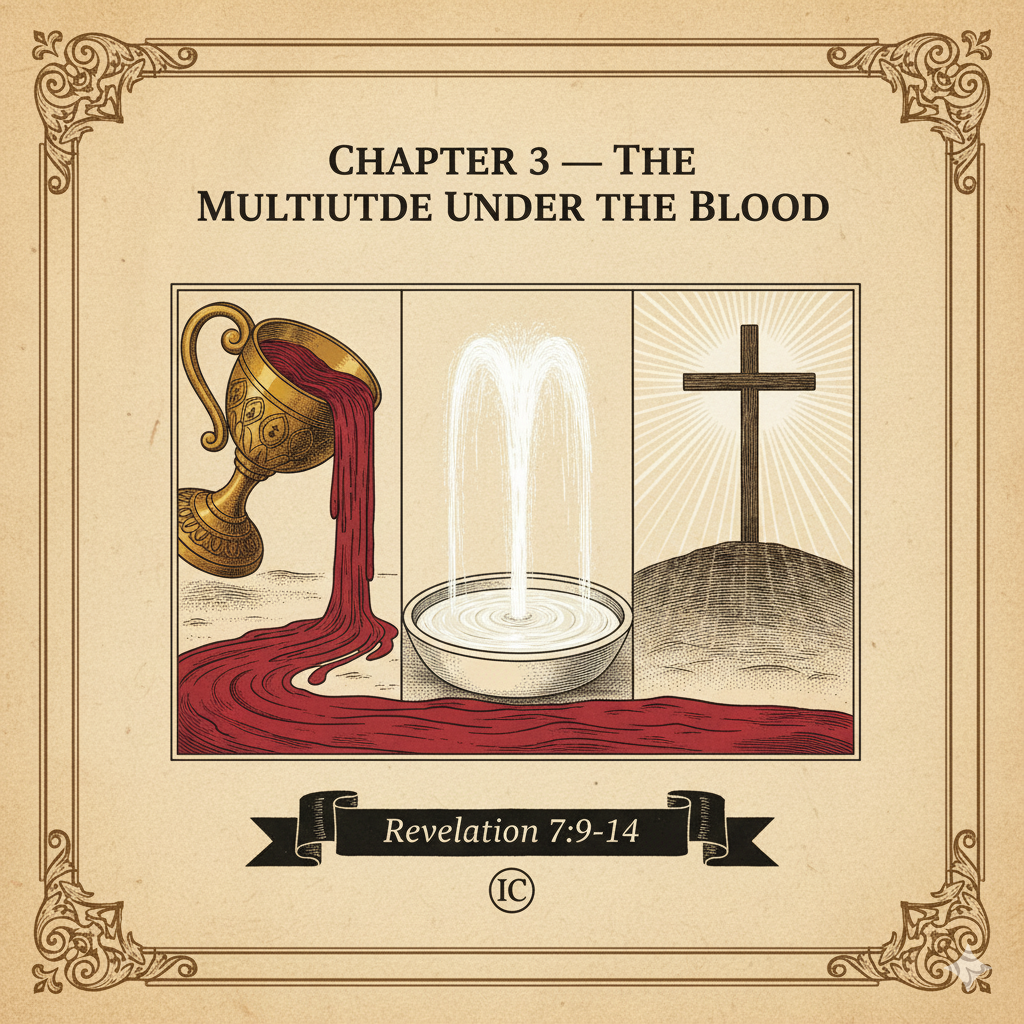
Chapter 3 — The Multitude Under the Blood
Immediately after John hears the number of the sealed, he sees something greater:
“After this I beheld, and, lo, a great multitude, which no man could number, of all nations, and kindreds, and people, and tongues, stood before the throne, and before the Lamb, clothed with white robes, and palms in their hands.” (Revelation 7:9)
The elder explains their identity:
“These are they which came out of great tribulation, and have washed their robes, and made them white in the blood of the Lamb.” (Revelation 7:14)
Here lies the mystery. The 144,000 were sealed with a temporary mark. The multitude are washed in the blood of Christ. The sealed are preserved for a season. The multitude are redeemed for eternity.
Most interpretations reverse this truth. They treat the sealed as the chosen saved, and the multitude as something vague. But Scripture proves the opposite: the multitude are the true redeemed, standing before the throne in white.
Verdict: The sealed are preserved temporarily. The multitude are saved eternally.
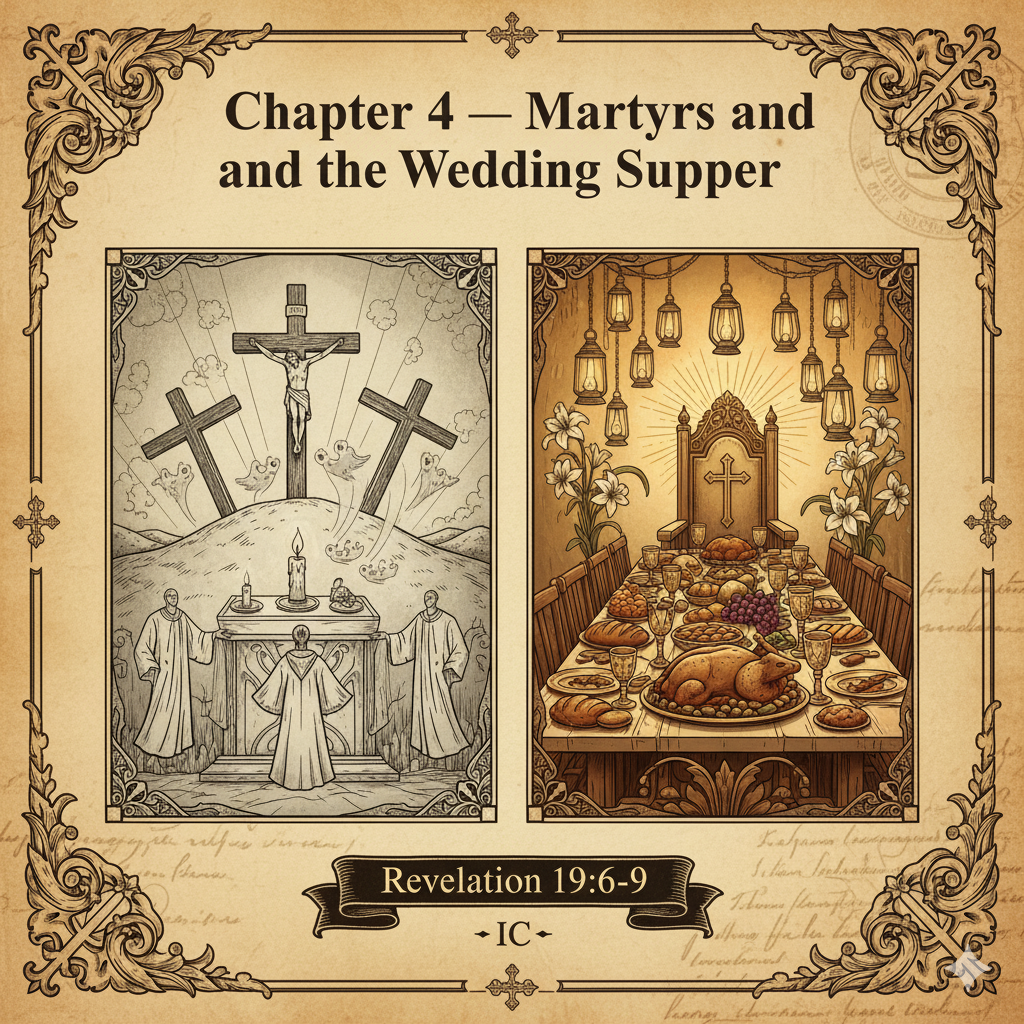
Chapter 4 — Martyrs and the Wedding Supper
Some argue the multitude are not in the same timeline as the sealed. But the martyrs prove otherwise.
In Revelation 6, the martyrs cry out from under the altar:
“How long, O Lord, holy and true, dost thou not judge and avenge our blood…? And white robes were given unto every one of them; and it was said unto them, that they should rest yet for a little season, until their fellow servants also… should be killed as they were.” (Revelation 6:10–11)
These same martyrs appear among the multitude in Revelation 7:
“These are they which came out of great tribulation, and have washed their robes.” (Revelation 7:14)
Their number is completed before the Wedding Supper of the Lamb:
“Let us be glad and rejoice… for the marriage of the Lamb is come, and his wife hath made herself ready.” (Revelation 19:7)
Therefore the multitude and the sealed share the same timeline. God concealed this by placing the sealed first, so the multitude would be overlooked. But it is the multitude, not the sealed, who are present at the Wedding Supper.
Verdict: The martyrs prove the multitude and the sealed belong to the same time. Only the multitude washed in Christ’s blood are ready for the Wedding Supper.
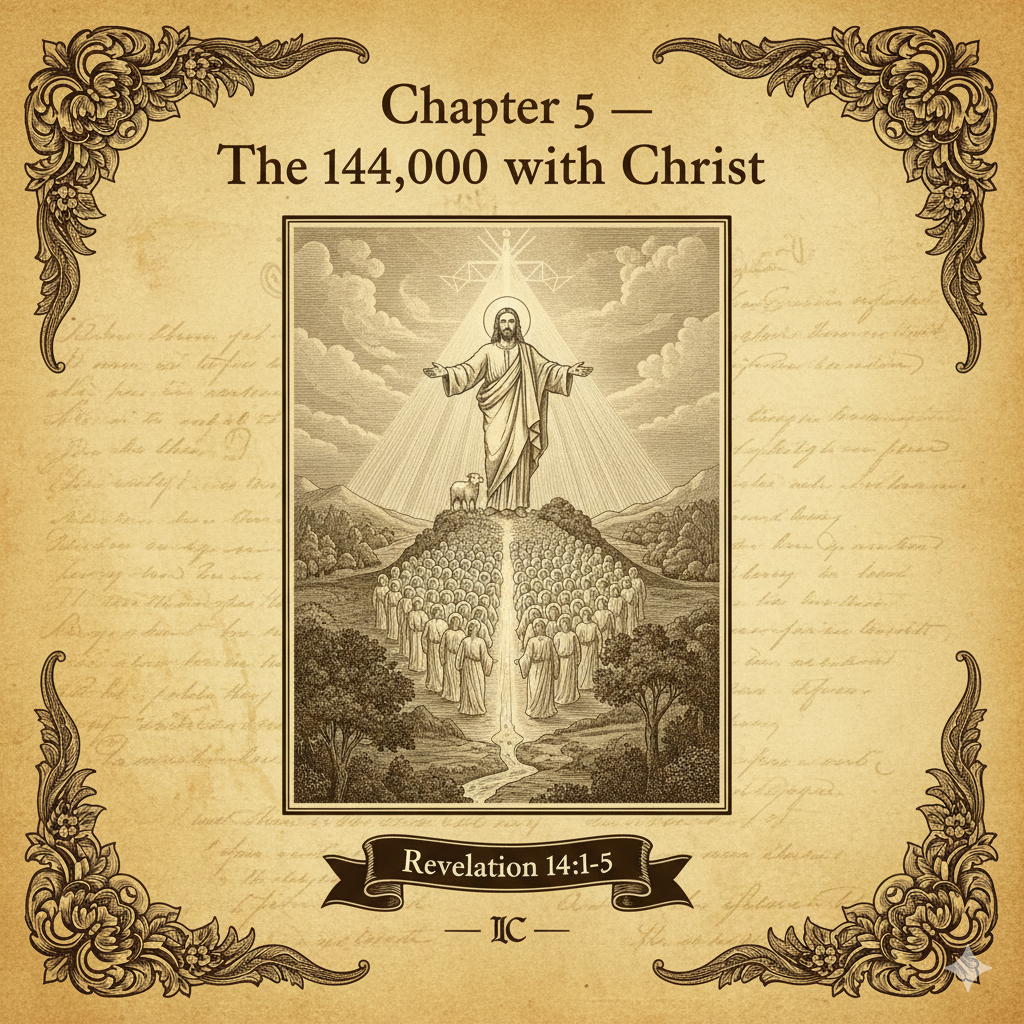
Chapter 5 — The 144,000 with Christ
In Revelation 14, John sees the number again:
“And I looked, and, lo, a Lamb stood on the mount Sion, and with him an hundred forty and four thousand, having his Father’s name written in their foreheads.” (Revelation 14:1)
This is not sealing. It is writing. The Greek word is graphō — to inscribe permanently. This is not a temporary mark for protection. It is eternal ownership.
These 144,000 are described:
“These are they which follow the Lamb whithersoever he goeth. These were redeemed from among men, being the firstfruits unto God and to the Lamb. And in their mouth was found no guile: for they are without fault before the throne of God.” (Revelation 14:4–5)
Verdict: The 144,000 of Revelation 14 are a separate group from the sealed. They are firstfruits, without fault, bearing the Father’s name forever.
Chapter 6 — The Philadelphian Connection
The promises to the Philadelphian church in Revelation 3 match the 144,000 of Revelation 14:
- “I… will keep thee from the hour of temptation” (Rev 3:10) → They are preserved, standing with Christ.
- “I will write upon him the name of my God” (Rev 3:12) → Father’s name written in their foreheads.
- “Thou… hast not denied my name” (Rev 3:8) → No guile, without fault before the throne.
Paul never founded a church in Philadelphia. This is symbolic. Philadelphia means “brotherly love.” These are the faithful who loved God and the brethren, from Abel onward.
Verdict: The 144,000 of Revelation 14 are the Philadelphians — not a church of geography, but a spiritual condition: those found without fault, standing with Christ.
Chapter 7 — The Seven Churches Unveiled
Paul planted 14–20 congregations in the first century. Yet Revelation names only seven.
This proves the seven churches are symbolic. They are conditions of obedience and failure, not a roll call of locations.
“The seven candlesticks which thou sawest are the seven churches.” (Revelation 1:20)
Ephesus, Smyrna, Pergamos, Thyatira, Sardis, Philadelphia, Laodicea — each represents a spiritual condition. Philadelphia alone is faithful.
Verdict: The seven churches are symbols of spiritual conditions. Philadelphia = the faithful, without fault.
Chapter 8 — The New Song
Revelation 14 says:
“And they sung as it were a new song before the throne… and no man could learn that song but the hundred and forty and four thousand, which were redeemed from the earth.” (Revelation 14:3)
In Israel, obedience itself was called a “new song”:
- “Sing unto him a new song; play skilfully with a loud noise.” (Psalm 33:3)
- “He hath put a new song in my mouth, even praise unto our God.” (Psalm 40:3)
- “O sing unto the LORD a new song: sing unto the LORD, all the earth.” (Psalm 96:1)
Only the 144,000 can learn this song because it is the song of obedience — their lives themselves were the melody of faithfulness.
Verdict: The new song belongs only to the 144,000 firstfruits.
Chapter 9 — The Final Verdict
The Bible reveals the truth of the 144,000:
- 144,000 sealed (Revelation 7): temporary, physical protection during tribulation.
- The Multitude (Revelation 7): washed in the blood of Christ, eternal redemption.
- 144,000 with Christ (Revelation 14): Philadelphians, firstfruits without fault, Father’s name written, singing the new song.
God concealed this mystery by repeating one number. The world assumed they were the same. But Scripture proves they are not.
This is the verdict of the Word. The case is closed. The judgment belongs to Christ.
Chapter 10 — Faithful, Perfected, and Without Fault
The Bible draws a careful line that must not be crossed.
That line separates faithfulness from perfection, and perfection from being found without fault.
Confusing these categories is what has caused centuries of error in understanding the 144,000.
Faithful Is Not Without Fault
Hebrews 11 gives God’s testimony concerning the faithful of old:
“These all, having obtained a good report through faith, received not the promise.”
(Hebrews 11:39)
The phrase “good report” does not mean sinless.
It does not mean perfected.
It does not mean judgment completed.
It means God testified to their faith.
Abel, Noah, Abraham, Moses, David, and the prophets were examined by God and found faithful within what was revealed to them. Yet none of them were made perfect at that time:
“God having provided some better thing for us, that they without us should not be made perfect.”
(Hebrews 11:40)
Faithfulness qualified them for mercy.
It did not complete them.
Mercy Deferred Judgment — It Did Not Remove Fault
King David proves this distinction beyond dispute.
Under the Old Covenant, there was no sacrifice for murder and no forgiveness under the law for adultery. David was guilty by law and deserved death. Fault was found.
Yet David was spared.
Why?
Not because the law cleared him — it did not.
Not because he was without fault — he was not.
But because he appealed to mercy, not justice.
Mercy did not erase David’s guilt.
It deferred judgment until Christ.
Without the blood of Christ, David would rightly perish. Scripture never denies this. It explains it.
Faithful Means Preserved — Not Completed
Those who obtained a good report were not facing the death penalty. They were not rejected. They were not lost. But they were also not finished.
They were held for completion.
This is why Hebrews does not end with triumph but with expectation. Perfection was still future. Judgment was still pending. Completion required Christ.
Without Fault Is a Final Condition
Revelation 14 describes a group standing with Christ:
“In their mouth was found no guile: for they are without fault before the throne of God.”
(Revelation 14:5)
This language is never used in Hebrews 11.
It is never applied to the faithful before Christ.
It is reserved for those who have passed final judgment.
To be found “without fault” is not to be forgiven — it is to be fully perfected. It is the end of the process, not the beginning.
The Missing Key
The missing understanding has always been this:
Those found faithful are eligible for perfection — but only some are finally found without fault.
Scripture never promises that every faithful person will stand in the same final position. It promises that every faithful person will be judged justly through Christ.
Who stands without fault is God’s decision alone.
Why the 144,000 Cannot Be Assumed
This is why the 144,000 of Revelation 14 cannot be assumed to include everyone from Abel onward automatically.
Faithfulness qualifies.
Mercy preserves.
But being found without fault is determined at the throne.
The Bible gives us the process, not the roster.
Final Clarity
- Faithfulness is testified.
- Mercy withholds judgment.
- Perfection comes through Christ.
- Being without fault is final and rare.
The 144,000 are not defined by lineage, era, or knowledge. They are defined by what is found when they stand before God.
This truth removes presumption, protects justice, and leaves judgment where it belongs — with Christ.
The Word has spoken.
The structure holds.
The verdict belongs to God.